Thermal Interpretation | These three cultural landmarks contain the great wisdom of Chinese civilization.
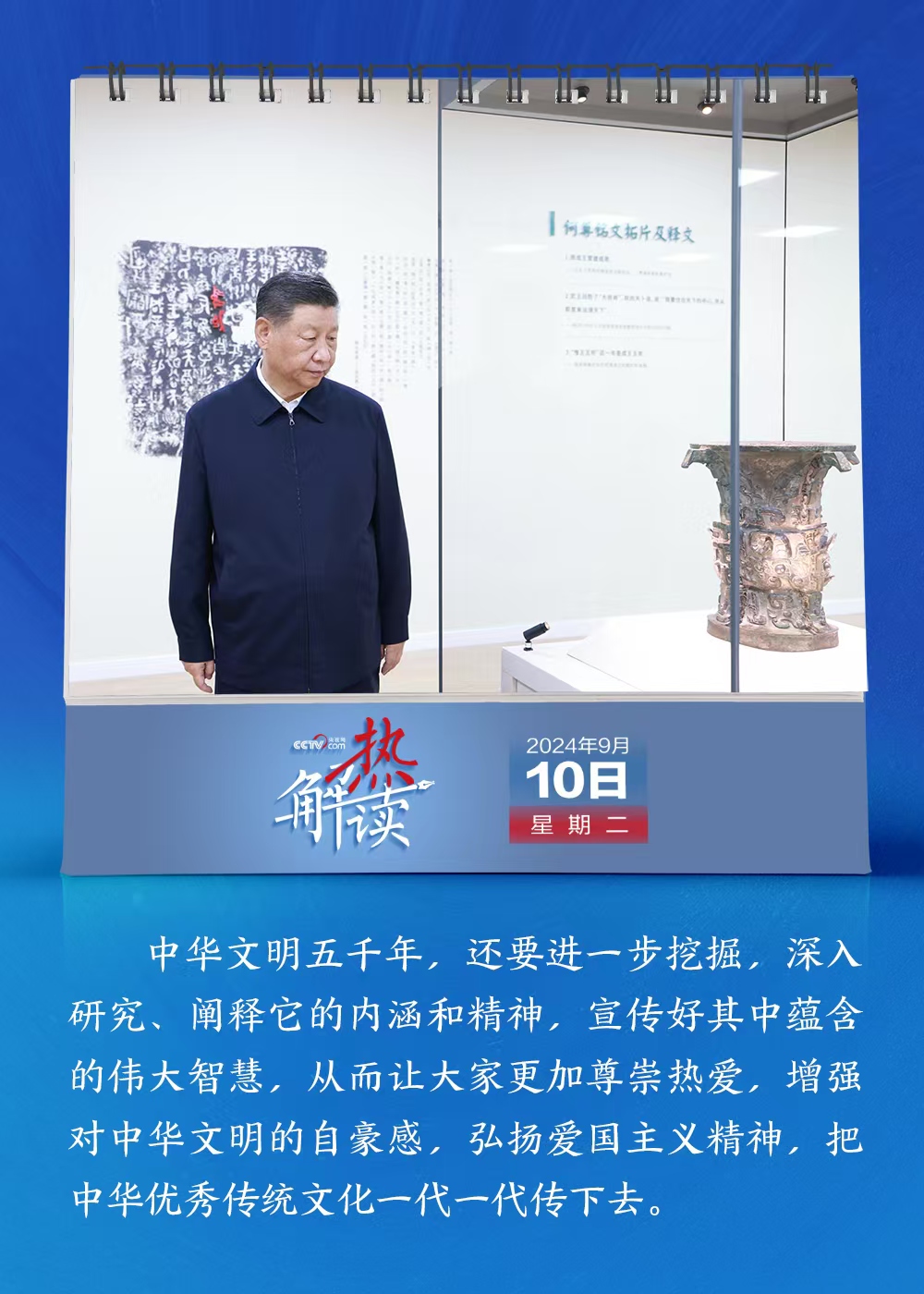
Baoji Bronze Museum is the first stop of General Secretary’s visit to Beijing. This institute mainly collects and displays bronzes from Shang Dynasty and Zhou and Qin Dynasties, and it is the first bronze culture museum named after bronzes in China. The general secretary visited three exhibition halls and four units in the hospital — — Home of Bronzes, Home of China, State of Zhou Rites and Road of Qin Zhao.
When visiting the "House China" unit, the general secretary stopped in front of He Zun, the "treasure of the town" in the museum, to observe carefully. He Zun, as the earliest recorded cultural relic of the word "China",Appear more than onceDuring the general secretary’s inspection and foreign affairs activities.
In 2019, in the National Museum of China, the General Secretary was attracted by He Zun, who was rich in modeling and exquisite in craftsmanship. He listened carefully and studied carefully. In 2020, he visited Shaanxi and mentioned "‘ China ’ The word "He Zun" was first found in the bronze unearthed in Shaanxi, so it can be traced back to Gu Yan today. In 2022, he personally approved the construction project — — When the China National Edition Pavilion opened, He Zun was exhibited in the pavilion.
In foreign affairs activities, the Chairman of the Supreme Leader often mentions He Zun to show the world "Why China". Before the opening ceremony of the Asian Civilization Dialogue Conference in 2019, President Xi and foreign leaders attending the opening ceremony visited the cultural relics exhibition and listened carefully to the explanation of He Zun. In 2023, in China — At the Central Asia Summit, the souvenir "He Zun" was selected as one of the gifts for the Central Asian heads of state.

Fuxi Temple is the second cultural landmark of General Secretary’s visit to Shaanxi and Gansu. Located in Tianshui, Gansu Province, which is known as the hometown of Xihuang, this temple is the most complete and earliest existing temple dedicated to Fu Xishi in China, and is also known as the "First Temple in China".
Fuxi is the ancestor of Chinese humanities. He used a series of inventions to lead Chinese ancestors to bid farewell to the wild and move towards civilization. Fuxi culture is the original culture of the Chinese nation, and some basic elements of Chinese culture can be traced back to Fuxi.
In Tianshui City, the General Secretary also inspected one of the four largest grottoes in China — — Maijishan Grottoes. Since the Sixteen Kingdoms period more than 1,600 years ago, skilled craftsmen have carved caves on Maiji Mountain, a famous scenic spot in Longyou, and more than 10 dynasties have successively built and rebuilt it, which has made this bright pearl on the ancient Silk Road.
Among all the cave temples in China, the argillaceous statues preserved in Maijishan Grottoes are the oldest and the most intact, which reflects the superb painting and plastic skills of ancient craftsmen in China. Maijishan Grottoes is also an important turning point of China Grottoes Temple towards localization, nationalization and gradual China.
From the bronze culture telling "Why China", to the ancestor of humanity with blood ties, and then to the grotto art &hellip, which has lasted for thousands of years; … The cultural footprint of the general secretary’s trip to Shaanxi and Gansu all confirms the long history and inclusiveness of Chinese civilization.
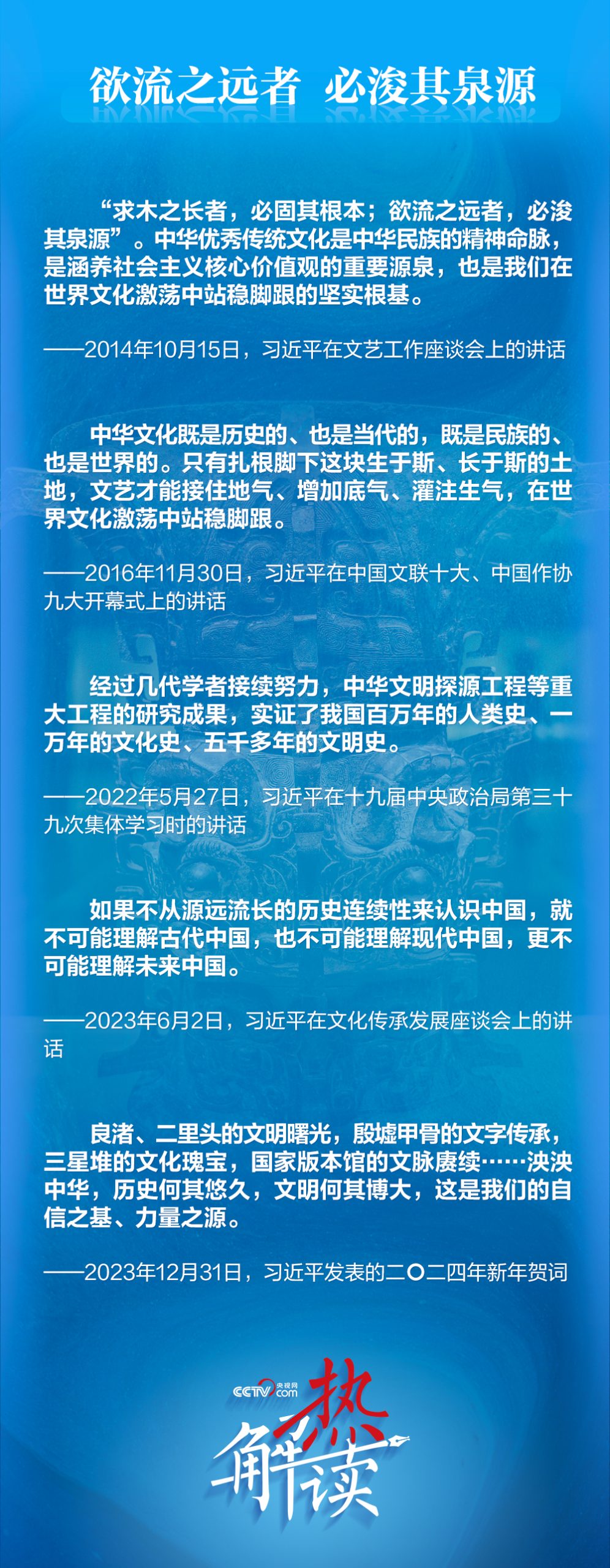
"The elders who seek wood must consolidate their roots; If you want to flow far away, you must dig its source. " General Secretary of the Supreme Leader has always attached importance to the exploration of Chinese civilization and archaeological work. He emphasized that a nation and a country must know who they are, where they come from and where they want to go. If they want to understand and think right, they must unswervingly move toward their goals.
Since the 18th National Congress of the Communist Party of China, the General Secretary has visited more than 100 historical and cultural heritages and turned his attention to the profound history of Chinese civilization again and again.
In October, 2022, the General Secretary visited the long-awaited Yin Ruins site, which was "a shocking piece of Oracle bones". He pointed out that Oracle Bone Inscriptions unearthed in Yin Ruins preserved for us the characters of 3,000 years ago, which pushed the history of China’s letter up for about 1,000 years.
In May, 2023, in Yuncheng, one of the cradles of Chinese civilization, the General Secretary emphasized that the project of tracing the source of Chinese civilization should be carried out in depth, and the research on the history of China civilization should be deepened.
In July 2023, in the new Sanxingdui Museum, the general secretary pointed out that the archaeological achievements of Sanxingdui site are well-known in the world, showing the achievements of civilization more than 4,000 years ago, and providing more powerful archaeological evidence for the pluralistic integration of Chinese civilization, the interaction between ancient Shu civilization and Central Plains civilization.
… … … …
China has a long history and a vast civilization. The origin of civilization provides an important source for us to know China and the profound Chinese civilization from a long history, and provides a strong support for us to enhance our historical consciousness and strengthen our cultural self-confidence.
After several generations of scholars’ continuous efforts, major engineering research achievements such as the Chinese civilization tracing project have proved China’s million-year human history, 10,000-year cultural history and 5,000-year civilization history.
A piece of cultural relics, a cultural relic, and a piece of culture and art are connected in series with the cultural history of the Chinese nation and contain the cultural power of "Why China".general secretaryHis concern for the source of Chinese civilization shows his profound thinking and cultural self-confidence in promoting cultural prosperity and building a cultural power.
This time in Baoji Bronze Museum, the General Secretary specially entrusted: "The Chinese civilization is 5,000 years old, and we need to further explore, deeply study and explain its connotation and spirit, and publicize the great wisdom contained in it, so that everyone can respect and love it more, enhance their pride in Chinese civilization, carry forward the spirit of patriotism, and pass on the excellent Chinese traditional culture from generation to generation."
Living water from the source moistens all generations. Only by not forgetting the original can we open up the future. This is the foundation of our self-confidence and the source of strength.