[Great Era] Chuzhou: the birthplace of reform and the pioneer of the new era. One bridge leads to the fast lane of the Yangtze River Delta.
Editor’s note:"The big era needs a big pattern, and the big pattern calls for a big mind." Since the 18th National Congress of the Communist Party of China, the Chinese nation has ushered in a great leap from standing up, becoming rich and becoming strong. With the mind of "the country’s greatest", we have worked hard, and revolutionary practices, breakthrough progress and landmark achievements have emerged in China, and people’s longing for a better life has become a reality. In order to show the vivid practice of promoting high-quality development under the guidance of Socialism with Chinese characteristics Thought of the Supreme Leader in the New Era, the Central Broadcasting Network specially planned and launched a series of thematic reports on "The Great Era", inviting you to walk into the depths of the city with us, feel the great changes in the past ten years, and see the magnificent pictures drawn by various places that have lived up to the great era and built dreams.
Yang Guangwang Chuzhou August 31 news Although it is nearly eighty years old, Yan Jinchang, the leader of the "big contract" in Xiaogang Village, Fengyang County, Anhui Province, is still busy every day. "After talking with you, I will preach to the tourists who come to study in the afternoon, so that more young people can understand history and cherish their present life." In the interview, Yan Jinchang was articulate and thoughtful.
Forty-four years ago, he and 17 villagers in the village pressed the red handprint on the land contract responsibility book and implemented the "all-in-one contract", thus the rural reform in China began. On April 25, 2016, the General Secretary of the Supreme Leader who visited Xiaogang Village said with emotion: "What was done with one’s life in those years became a thunder of China’s reform and became a symbol of China’s reform."
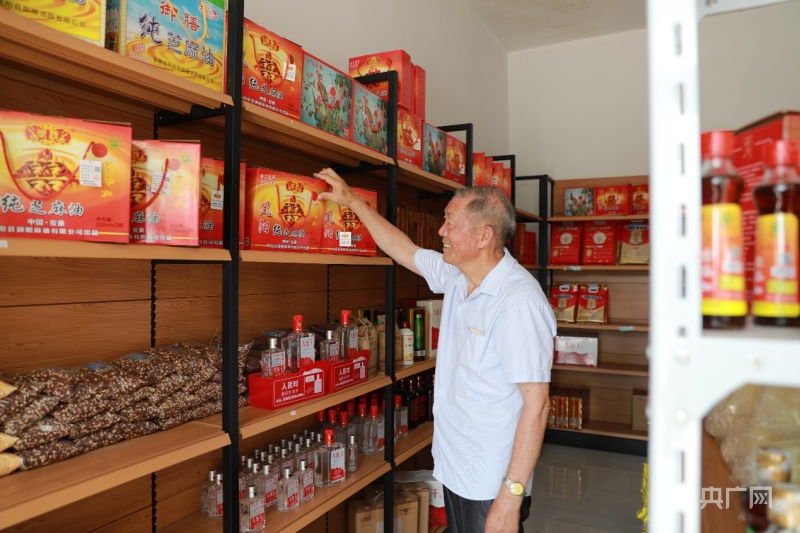
Yan Jinchang tidies up the shelves of his own farmhouse music (photo courtesy of respondents from Yangguang. com)
In Xiaogang Village today, the village is clean and tidy, and the rural industry is prosperous. Many villagers have transferred their land and started farmhouses, and their income has been guaranteed. Chuzhou City, where it is located, is also under the guidance of the "all-in-one responsibility" spirit of "daring to try and be the first", and is determined to forge ahead with the spirit of continuous reform. The regional GDP has spanned three steps of 100 billion yuan, 200 billion yuan and 300 billion yuan in the past decade.
Today, this city, once famous in the world because of Ouyang Xiu’s "Drunken Pavilion", has not only "the joy of mountains and rivers" but also "the joy of industry" and has become the "bridgehead" for Anhui to promote the integrated development of the Yangtze River Delta.
From "Divide" to "Combine" China’s Rural Reform as the First Village: A New Approach to Development
In mid-August, although it was already in beginning of autumn, Xiaogang Village was still hot. When the reporter saw 60-year-old Cheng Xibing, he was sweating in the field and his face was tanned.
On April 25th, 2016, General Secretary of the Supreme Leader presided over a symposium on rural reform in Xiaogang Village, stressing: We should persist in taking solving the "three rural issues" as the top priority of the whole party’s work, intensify rural reform under the new situation, strengthen urban and rural planning, fully implement the policy of strengthening agriculture, benefiting farmers and enriching farmers, and promote a solid agricultural foundation, rural harmony and stability, and farmers living and working in peace and contentment. The general secretary’s remarks made Cheng Xibing, who makes a living by farming, encouraged and full of energy.
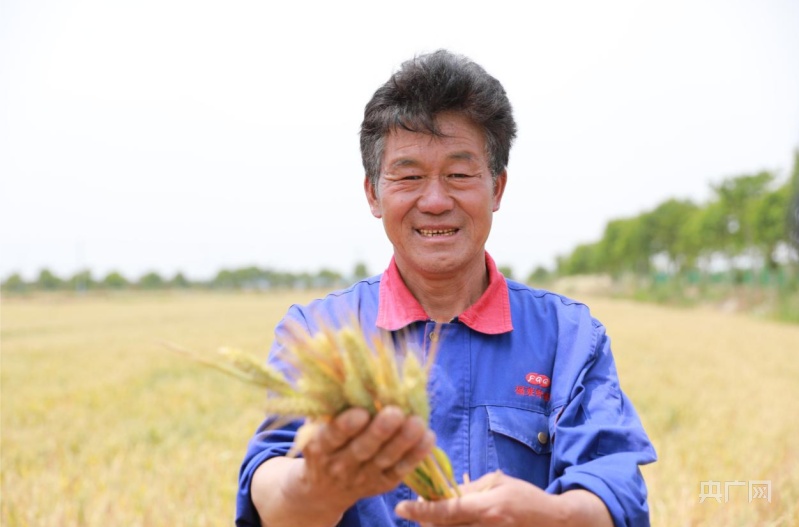
Cheng Xibing, a large grain grower in Xiaogang Village, is looking at the growth of wheat. This year, his family’s wheat has achieved a bumper harvest (photo by Chen Huabin from Yangguang. com)
For many years, due to historical reasons, some farmers’ contracted plots have blurred boundaries and unclear ownership of rights and interests, which has plagued the development of modern agriculture. "Before the land management right was confirmed, my family had only 37 acres of land. Because there is little land, no matter how tossing, there are only tens of thousands of dollars in income every year. " Cheng Xibing told reporters that the turnaround came from July 2015, and Xiaogang Village took the lead in issuing the rural land contractual management right certificate in the province, which gave Cheng Xibing a space for "bold and bold trials" on the land. "At first, my family was not optimistic, but I held on. With the steady increase in income in recent years, now they have begun to support me to expand the scale. "
Now, the land transfer area operated by Cheng Xibing has reached nearly 700 mu. In his warehouse, there are all kinds of agricultural machinery such as transplanters, seeders and harvesters, and the planting mechanization rate is nearly 100%. This summer, Cheng Xibing’s wheat got a bumper harvest, and the output and unit price were the highest in the past years. The net profit of wheat this season alone was more than 100,000 yuan.
At that time, in order to "eat enough rice", the "all-in-one contract" changed the land in Xiaogang village from "combination" to "division", and now "xiaotian" is combined into "Daejeon", which gives mechanized operation and high-standard farmland a place to use. Yan Jinchang, who has been paying attention to reform for many years, believes that this "separation and integration" is a vivid embodiment of reform on the road.
In the past ten years, Chuzhou has promoted the whole city by grasping small hills, and explored many distinctive "Chuzhou experiences" and national highlights. In May 2015, Tianchang City, Chuzhou was identified as a pilot reform of the joint-stock cooperative system of rural collective assets nationwide. 170 villages changed their resources into assets, funds into shares, and farmers became shareholders. Farmers realized "supervision, ownership and dividends" for collective assets; In August 2016, Dingyuan County, Chuzhou became the second batch of pilot counties for the paid withdrawal of the national land contractual management right; In 2021, Chuzhou took the whole city pilot reform of rural homestead system and the construction of national rural reform pilot zone as the starting point to revitalize land resources, cultivate rural talents and attract capital to the countryside through reform.
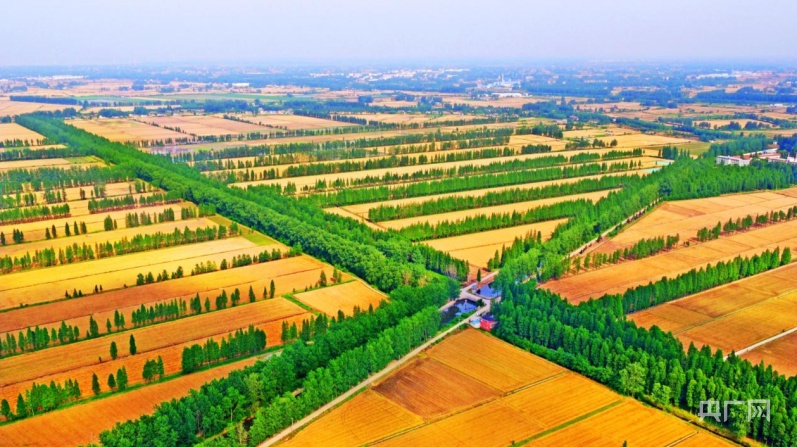
Harvest scene in Tianchang National Modern Agricultural Industrial Park (photo by Yang Guangwang Fa Ji Cheng Jun)
The continuous rural reform has laid a solid foundation for the revitalization of rural industries in Chuzhou.
At the end of 2018, the high-standard farmland project of Xiaogang Village pastoral complex started, which is an important part of Xiaogang National Agricultural Science and Technology Park. Relying on the large-scale planting of high-standard farmland, Xiaogang Village has been built into the only national agricultural science and technology park located at the village level in China. The planned area of the core area of the park is 42,000 mu, and it is in accordance with the functional layout of "one integrated four parks", including pastoral complex, agricultural product processing industrial park, modern horticultural industrial park, circular agricultural industrial park and intelligent agricultural demonstration park. At present, the park has attracted a large number of grain deep processing enterprises to settle in, and many high-end food products have been developed and produced in Xiaogang Village, and one national flour product R&D technology center, four provincial-level Post-Doctoral Research Center, five creative spaces and incubators have been established successively.
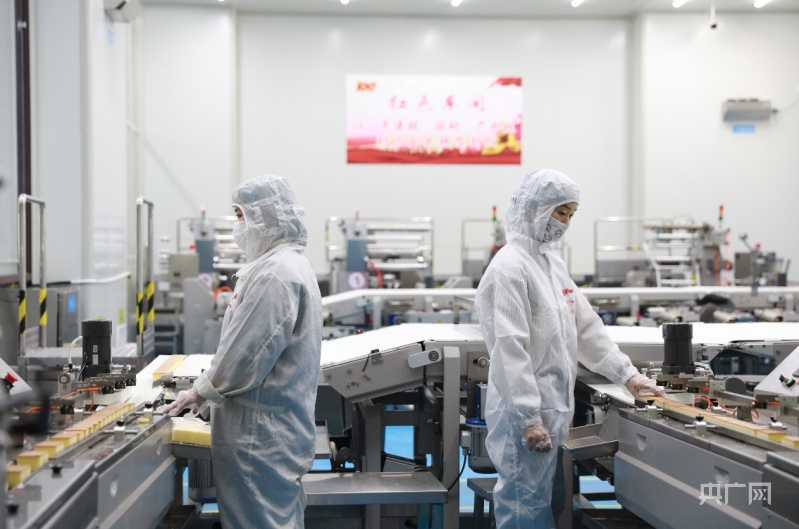
Sterile production line of a food enterprise in Xiaogang Village National Agricultural Science and Technology Park (photo by Chen Huabin from Yangguang. com)
In the first half of this year, 12 key rural revitalization demonstration projects were started in Xiaogang Village with a total investment of 3.5 billion yuan, covering smart agriculture, healthy food, rural tourism and other fields.
With "10 billion hilltops" as the "leader", Chuzhou is accelerating the layout of green food deep processing industry. At present, 129 projects have been introduced, with a total investment of 82.117 billion yuan, ranking second in Anhui Province. The well-known snack foods such as eight-treasure porridge and buns have been labeled as "Made in Chuzhou".
The "Pavilion Satisfaction" around Langya Mountain is now an industry.
A Langya Mountain is half the history of Chuzhou.
Ouyang Xiu’s timeless masterpiece "Zuiweng Pavilion" made the world know the beautiful landscape of Chuzhou, and also made Chuzhou and Pavilion culture have an indissoluble bond. In recent years, with the title of "Pavilion", Chuzhou proposed to build a "Pavilion" city business card and a "Pavilion Satisfaction" business environment service brand to provide the best business environment for enterprises. After several years of practice, today’s Langya Mountain has become an industry around Chu and Chu.
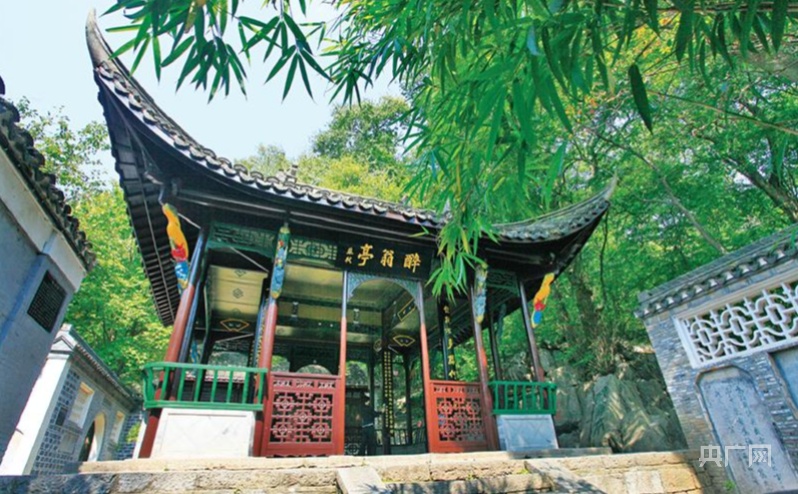
Famous articles and pavilions add a strong cultural heritage to Chuzhou (photo by Pan Hanjian from Yangguang. com)
Zhang Tao, vice president of Anhui Branch of China Household Electrical Appliances Research Institute, is a "new Chu person". "I am a northerner. I have lived in Chuzhou since I was founded in 2011. In the past ten years, the headquarters has asked me to go back to work many times, but I declined. Because in Chuzhou, I can find the atmosphere of entrepreneurship. "
Zhang Tao told reporters that Chuzhou has always occupied a large share in the field of smart home appliances in the country, but in the face of fierce industry competition, transformation and upgrading have become a "must-have question" in front of enterprises. "The enterprises in Chuzhou have answered well!"
As an expert in home appliance industry, Zhang Tao believes that although Chuzhou is an inland city, people here are "daring to try and be the first", are not conformist, and are full of curiosity about new things, which has laid a foundation for the upgrading and development of the industry.
By the end of 2021, Chuzhou smart home appliance industry had gathered 113 industrial enterprises above designated size, and its output value increased by 26.5% year-on-year. After this round of industrial upgrading, Chuzhou has become the only "Guo Zi" home appliance industrial base in China, which integrates the national electricity and equipment manufacturing base, the national home appliance design and manufacturing characteristic industrial base and the national new industrialized home appliance industry demonstration base.
Household appliances are a traditional industry in Chuzhou, while photovoltaic is a new industry developed out of nothing in Chuzhou in recent years.
In 2016, Fengyang County introduced the first photovoltaic glass enterprise, which opened the cornucopia of photovoltaic industry development in Chuzhou. In just a few years, many leading enterprises in the upper, middle and lower reaches of the photovoltaic industry have successively settled in Chuzhou. By December, 2021, Chuzhou has completed, is under construction, has signed contracts to carry out preliminary work and is talking about 59 key projects in photovoltaic industry, with a total investment of 197.4 billion yuan. At the 2021 annual meeting of China photovoltaic industry, Chuzhou clearly put forward the strategic goal of building the top grid into a world photovoltaic industry base.
What is the secret of Chuzhou, from the contrarian trend of home appliance industry to the strong photovoltaic industry from scratch?
Dong Dayu, a four-level researcher of the Development and Reform Commission of Chuzhou City, told the reporter that according to the requirements of the brand of "Pavilion Satisfaction" business environment service, Chuzhou has established the concept of "we can do everything that can be done in the Yangtze River Delta region", and "enterprises whistle and departments report" has become the norm.
Since February, 2022, Chuzhou Municipal Affairs Service Center has taken the lead in implementing the "No Closing Hours" for 365 days in Anhui, and has achieved cross-regional communication with 116 government affairs services in 40 cities in the Yangtze River Delta, and 186 issues have achieved nationwide online communication across provinces. "More than 20 certificates are required for enterprises to go public, and the municipal enterprise service center often takes the initiative to serve, ‘ One-stop ’ Complete, which makes many enterprises to ‘ Chuzhou attitude ’ ‘ Chuzhou speed ’ Very satisfied and strengthened their confidence in deeply cultivating Zhangzhou. " Huang Hai, deputy director of Chuzhou Investment Promotion Bureau, said.
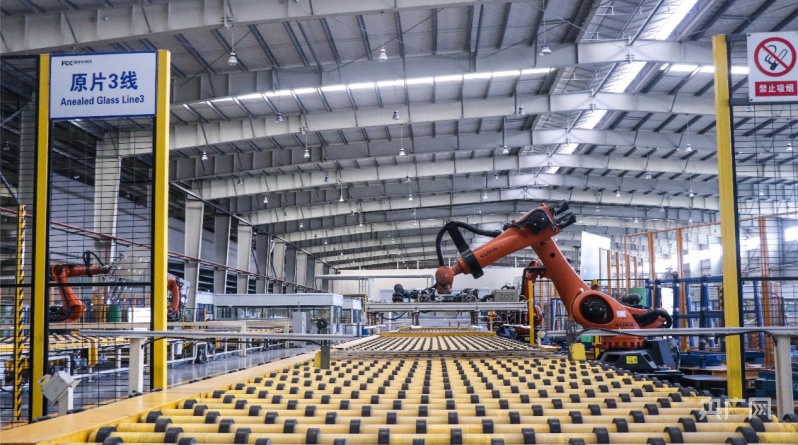
Fully mechanized production workshop of photovoltaic enterprises in Fengyang County (photo by reporter Wang Mingshe of Yangguang. com)
The construction of business environment has also created a large number of cadres who understand investment and economy for Chuzhou. Since 2014, Chuzhou City has organized 40 investment groups every year to go deep into the Yangtze River Delta, Pearl River Delta and Beijing-Tianjin-Hebei regions to visit enterprises and projects.
Chen Yaoguang, a member of the Party Group of Chuzhou Municipal Market Supervision Administration, is the first member of the investment promotion team. He has been engaged in quality and technical supervision for a long time and was once a "layman" in attracting investment. In order to complete the role change, he constantly consulted his peers and studied relevant knowledge in depth, and finally won the trust of many enterprises. Chen Yaoguang said: "To sum up, the feeling of attracting investment is mainly to the enterprise ‘ Love, sincerity, truthfulness and faithfulness ’ . Now I have returned to my old job, but I have always adhered to this attitude in the process of dealing with enterprises. "
Huang Hai calculated an account for the reporter: "From 2014 to now, with eight years of persistence, Chuzhou has trained hundreds of cadres who have experienced in the front line of investment promotion. Even if they didn’t attract investment at that time, this experience of studying the industry and understanding the enterprise made them feel and have the ability to think for the enterprise after returning to their posts, without saying layman’s words or acting outside, and providing help for the development of enterprises in various fields. "
Developing Across Boundaries, Deducing Tales of Two Cities and Accelerating Integration into the Yangtze River Delta
"Chuzhou and Nanjing face each other across the river. Before the bridge was opened to traffic, the bridge deck was narrow, the road condition was poor, and it was often congested. It would be blocked on the bridge deck for more than half an hour during the rush hour." Deng Wenxiu, who helped his parents to do business in Nanjing since 2018, still lives in the Weihe River and commutes to and from Chuning every day. A few years ago, the biggest headache for her was traveling, especially crossing the Chahe Bridge. "After the bridge was widened and opened to traffic in May this year, now you don’t have to slow down when driving on the bridge, and you can reach the other side in three or four minutes." Deng Wenxiu said.
As the "bridgehead" of Anhui’s eastward development, Chuzhou, located at the core of Nanjing and Hefei, has unique geographical advantages. In November 2018, the integrated development of the Yangtze River Delta rose to a national strategy, which injected new opportunities into Chuzhou. To integrate into the Yangtze River Delta, we must first shorten the spatial distance and let residents enjoy the convenience of public services in the same city.
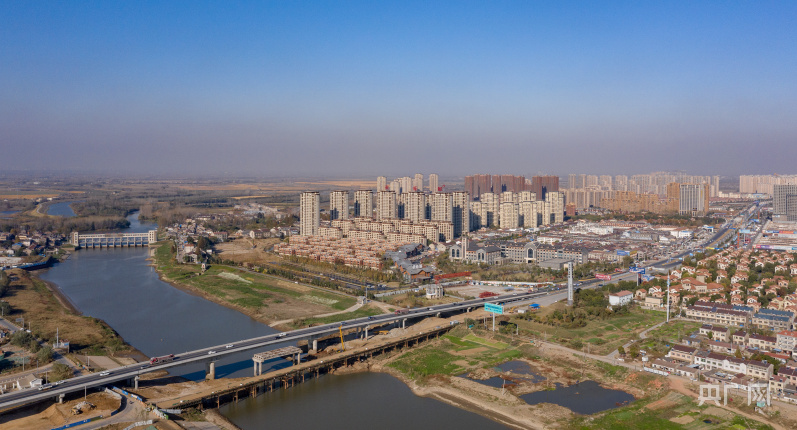
The widening and reconstruction of the Chahe Bridge is more convenient for the "Tale of Two Cities" in Chuhe, Jeannin (photo by Sun Jun from Yangguang. com)
The Chahe Bridge mentioned by Deng Wenxiu is an important inter-provincial channel connecting Lai ‘an County in Chuzhou and Jiangbei New District in Nanjing. Over the years, due to the proximity of the two places, there are not a few "Anhui people working in Jiangsu" like her, and "A Tale of Two Cities" is staged almost every day, so convenient transportation is particularly important to them. The Chahe Bridge, which was jointly widened and rebuilt by Jiangsu and Anhui provinces, changed from two lanes to six lanes, making the traffic smooth. The Chuning Intercity Railway (Chuzhou Section) under construction is expected to be put into trial operation in 2023.
The problem of widening the Chahe Bridge can be solved by breaking the ice, which is due to the transformation of cross-border cooperation after the implementation of the Yangtze River Delta integration strategy. Wang Xianliang, deputy director of the Management Committee of the New Functional Zone in the adjacent area between Ningchu and Chuzhou, believes that before the two sides of a river belonged to different provinces, the coordination and planning of many major projects would encounter obstacles. Under the framework of regional integration in the Yangtze River Delta, Dingshan — Chahe and Pukou — The construction of new functional zones in the adjacent areas between provinces such as Nanqiao began, and cross-regional cooperation and development were realized by breaking the self-restraint of administrative boundaries, which helped the industrial development and life integration of the two places.
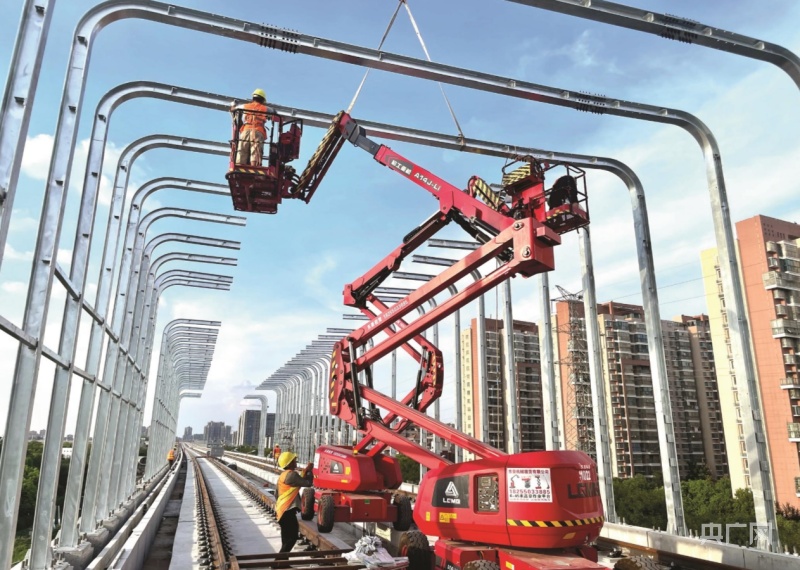
The first inter-provincial intercity railway in China — — The Suining Intercity Railway (Chuzhou Section) is expected to be put into trial operation in 2023 (photo by Zhou Xiaodan from Yangguang. com)
"Now, Chuzhou and Nanjing have organizational and institutional guarantees in cooperation in planning, transportation, industry, ecology and people’s livelihood, breaking the previous state of piecemeal cooperation and scale." In Wang Xianliang’s view, the establishment of functional areas has opened up a new situation for the integration and development of Ning and Chu.
Opportunity is the war drum, which activates the development of living water. Focusing on the goal of building a modern city in the central area of the Yangtze River Delta, Chuzhou has accelerated its integration into the Yangtze River Delta, taking the new functional areas in the neighboring provinces as the breakthrough point and the inter-provincial industrial cooperation park as the support point.
"The Chuhe River is the provincial boundary river between Anhui and Jiangsu, and the biomedical valley in Jiangbei New District of Nanjing is on the other side." Jia Ganwei, deputy secretary of the Party Committee of Chahe Town, said that with the shortage of industrial development space, Jiangbei New District now often recommends projects to expand production capacity to invest in Chahe River across the river. At present, 20 billion projects in the field of new materials have been started in the Chahe River, and three 1 billion projects are under construction, and the cross-boundary development trend is in full swing.
Compared with the inter-provincial neighboring functional zones, the Sino-Singapore Suzhou-Chuzhou High-tech Industrial Development Zone, which started construction in 2012, is the "big brother" for Chuzhou to integrate into the Yangtze River Delta, and it is also the first market-oriented cooperative development zone for Suzhou Industrial Park to leave Jiangsu.
"In the past ten years, Chuzhou and Suzhou have continuously innovated the cooperation mechanism, which has turned a once wasteland into a ‘ Integration of production and city ’ A modern new city. " The relevant person in charge of the Sino-Singapore Suzhou-Chongqing High-tech Zone Management Committee told the reporter that there are now 36 listed companies and 6 Fortune 500 companies in the park, attracting more than 80 billion yuan, and the number of projects from the Yangtze River Delta region accounts for 76.5%.
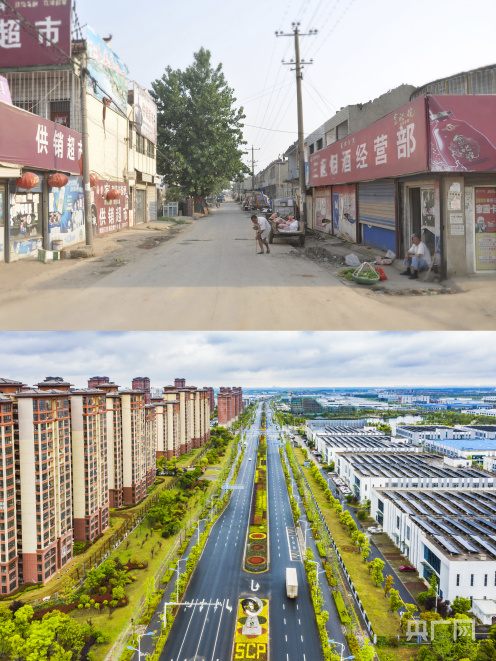
A comparative picture of the development of Sino-Singapore Suzhou-Chuzhou High-tech Industrial Development Zone in the past ten years (Photo courtesy of Central Broadcasting Network)
"At the beginning, I followed the company to start a business in Suzhou-Chuzhou High-tech Zone, and now our family lives here. The good living and working atmosphere in Chuzhou deeply attracted us. " Lin Yuntao is a foreign executive of an enterprise in Sino-Singapore Suzhou-Chuzhou High-tech Zone. He expressed his affirmation of Suzhou-Chuzhou High-tech Zone with his practical actions.
It is the orientation requirement of Suzhou-Chuzhou High-tech Zone to create a development environment suitable for industry and living. Shortly after its initial construction, the park put the worries of introducing talents on the agenda early. "Through comparison, we have carried out extensive cooperation with Nanjing famous Langya Road Primary School since 2015." Gao Yan, vice president of Nanjing Langya Road Primary School Suzhou Branch, recalled that Langya Road Primary School is one of the top 100 primary schools in China, and its introduction gave foreign talents a reassurance in their children’s education.
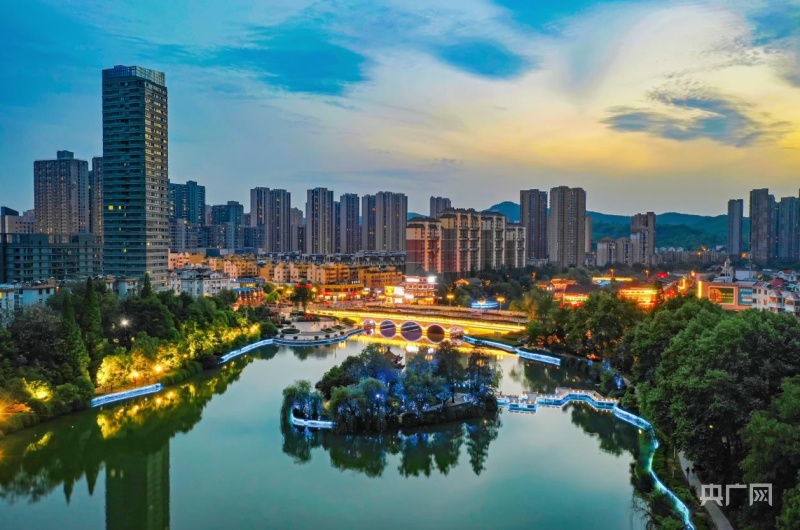
Night view of South Lake in Chuzhou (photo by Yang Guangwang)
The unique location, increasingly convenient transportation and open and inclusive culture make more and more enterprises and talents in the Yangtze River Delta willing to start a business and develop in Chuzhou. "I often deal with government departments and enterprises in Nanjing, and they now recognize the development space and business environment of Chuzhou." Jia Ganwei said that in his view, the achievements of Chuzhou are inseparable from the deepening reform and self-pressure in these years.
"Reform is to constantly change and always be new, so as to keep moving forward." Yan Jinchang said. In the past ten years, reform and innovation have become the most beautiful background of Chuzhou’s development. In 2022, Chuzhou ushered in the 30th anniversary of the founding of the city, standing at the age of 30, constantly changing and always new, and Chuzhou is in its youth.
Hundreds of reading cities:
New Chuzhou between mountains and rivers
□ Jia Hongbin
Benevolent people love mountains, while wise people enjoy water. Since the publication of Ouyang Xiu’s Zuiweng Pavilion, Chuzhou has been presented in the gallery of human history in China with the charm of "caring between mountains and rivers". Because of this heroic article, Langya Mountain enjoys the reputation of "there is no other mountain after Penglai". And water in Chuzhou, starting from "Rangquan", has another flavor.
Water is the blood of a city, and famous cities in history are often born of water. Located on the left bank of the Yangtze River, Chuhe River is not only the boundary river between Jiangsu and Anhui provinces, but also the mother river of Chuzhou. This mother river, like the same art corridor, brings an endless human landscape to Chuzhou, which is rich in historical and cultural relics. These cultural relics span a long time and have rich historical significance. They are fixed in the beautiful mountains and rivers of Chuzhou and become the symbol of Chuzhou culture.
Qingliu River, a tributary of Chuhe River, is also an important carrier of Chuzhou history and culture. The ancient city of Chuzhou was opened in the Sui Dynasty, and its streets and lanes are known as "six gates, four passes and seventy-two and a half lanes", such as Qingliu Street, Tiaoshui Lane, Jingang Lane, Xianyu Lane and Zhangjia Lane, which are familiar to Chuzhou people. There are also historical relics such as Guanghui Bridge, Shangshuiguan, Zunyang Street, Fanxiong Pavilion and Dianzhenlou built by Xin Qiji. They spread all over the sides of Xijiang River and are closely related to the soul of Qingliu River.
The Minghu project, which is hand in hand with Qingliu River, is the "No.1 Project" for the green development of Chuzhou. After the sluice is impounded, the vast blue waves and the verdant Langya Mountain shine together, and the new Chuzhou has a unique style between mountains and rivers. Today, the garden landscape of the dam site, the shaping of the earth topography of the lake area, the main garden road, the fashion square, the colorful greenway, the rose garden, the flower sea, the wetland science popularization area and other park projects have been completed, and the supporting facilities such as Minghu Pavilion, Shuixiu, Celebration Square, Bridge No.234 and Post Station, Mengchong Paradise, Water Paradise, Daming Cultural Park, Nine-masted Treasure Boat and North-South Cultural Commercial District have also been basically completed. Minghu Lake has become the "urban eye" of Chuzhou. Together with Chuhe River and Qingliu River, it will bear one of the poles of "water" culture in Chuzhou’s landscape city, and together with Langya Mountain, it will bear the new ecological mission of "harmony between water and mountains and common prosperity of mountains and rivers". It is a new punching place in online celebrity, Chuzhou, in addition to many scenic spots in Langya Mountain, and it is a hydropower highland of Chuzhou’s new culture.
Every city with taste has its own soul. The gathering of "mountains, rivers, cities and lakes" is the urban soul of the Jiangbei era in Chuzhou and the four dimensions created by cultural feelings. The four-dimensional landscape system makes the ancient city of Chuzhou "care about the mountains and rivers" more outstanding.
From "all-in-one" to "Great Yangtze River", from "Great Chucheng" to "Big Jiangbei", Chuzhou people "care about the relationship between mountains and rivers" have worked hard with the reform spirit of daring to think, dare to try and be the first, and a new Chuzhou with prosperous economy, connected mountains and rivers, beautiful ecology, pleasant and livable has stood upright in the land of Jianghuai.
(The author is the chairman of Chuzhou Writers Association, Anhui Province)
Master planner: Feng Yu, Zhang Jun.
Chief producer: Wu Gang Xia Lingyun
Coordinator: Tao Yude
Reporter: Zhou Ran Zhang Xuanjian Wang said.
Editor: Chen Jinlian and Wang Wenwei
Video: Zhou Ran Zhang Xuanjian Wang said Cheng Ming Pan Long Chen Huabin.