How many do you know about the appearance of "black technology" in the Paris Olympic Games?
Athletes are struggling in the Olympic Games, and as spectators, we cheer for them through the screen. In the Paris Olympic Games, both the technical and tactical analysis of athletes and the broadcast of events were empowered by AI technology, which also brought us an immersive watching experience.
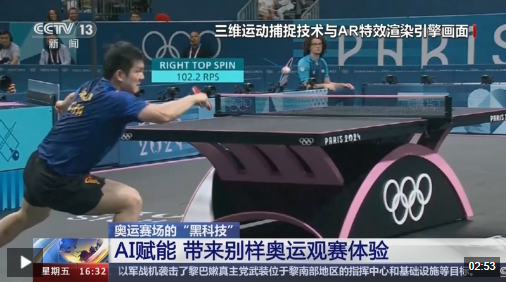
AI empowerment brings a different Olympic watching experience.
In the broadcast of table tennis competition in Paris Olympic Games, the application of AI technology accurately presents the speed, landing point and trajectory special effects of table tennis in the competition, which brings a different experience to the audience.
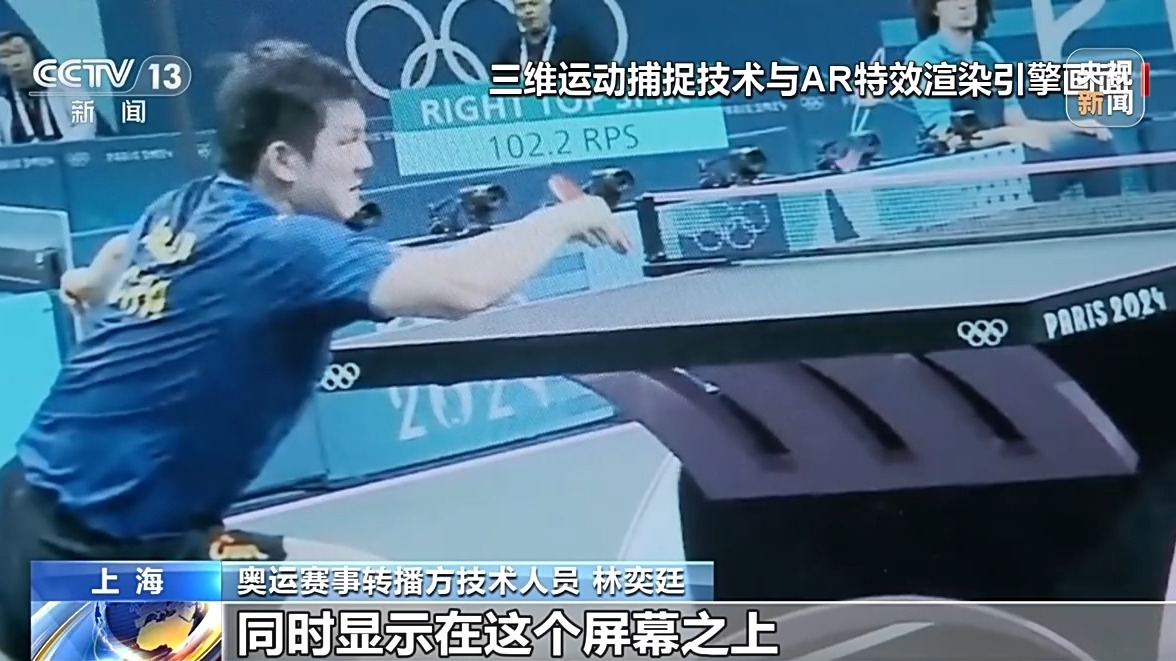
Lin Yiting, a technician of the Olympic Games broadcaster:We can see the effect provided here in this live video, which is actually a rotation speed and turning direction when Fan Zhendong hits the ball. At present, we have seen that our steering and rotation speed are displayed on this screen at the same time, and the rotation speed has reached 102.2 revolutions per second. At a level of more than 100 revolutions, it can actually reflect the competitive level of the players.
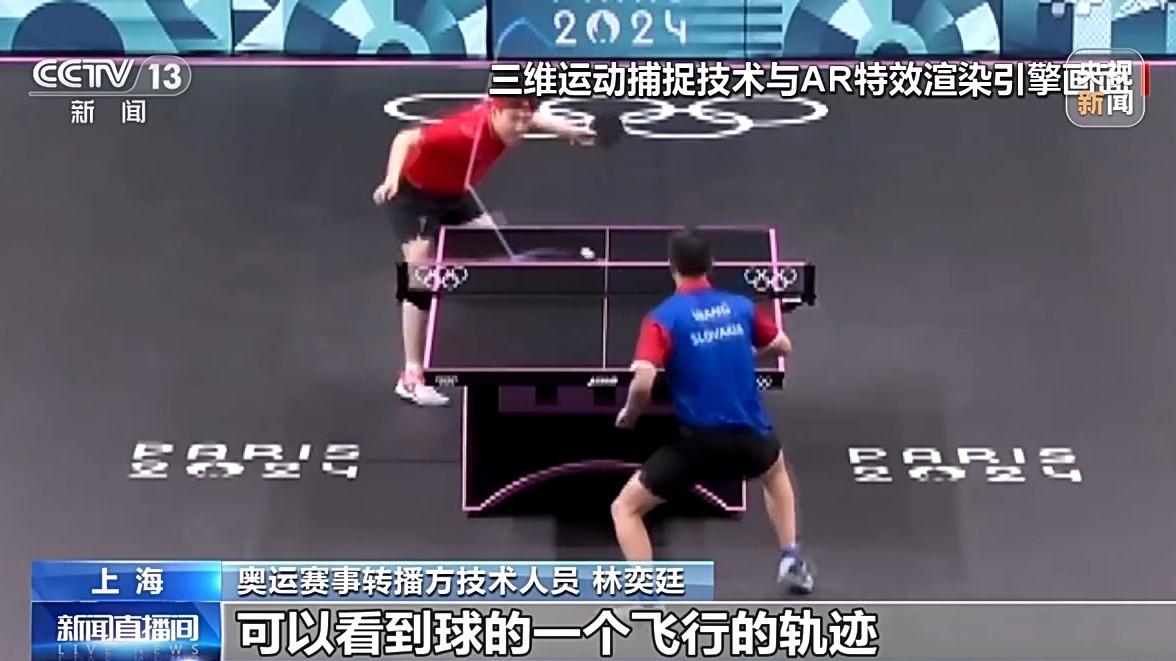
Lin Yiting, a technician of the Olympic Games broadcaster:In addition, we can see one of the effects in this competition, which is to restore the real-time trajectory, and we can see a flying trajectory of the ball and its landing point on the table. Then through such a trajectory, the audience can intuitively see a sense of speed of the ball, including a sense of strength, to reflect the essence and charm of table tennis.
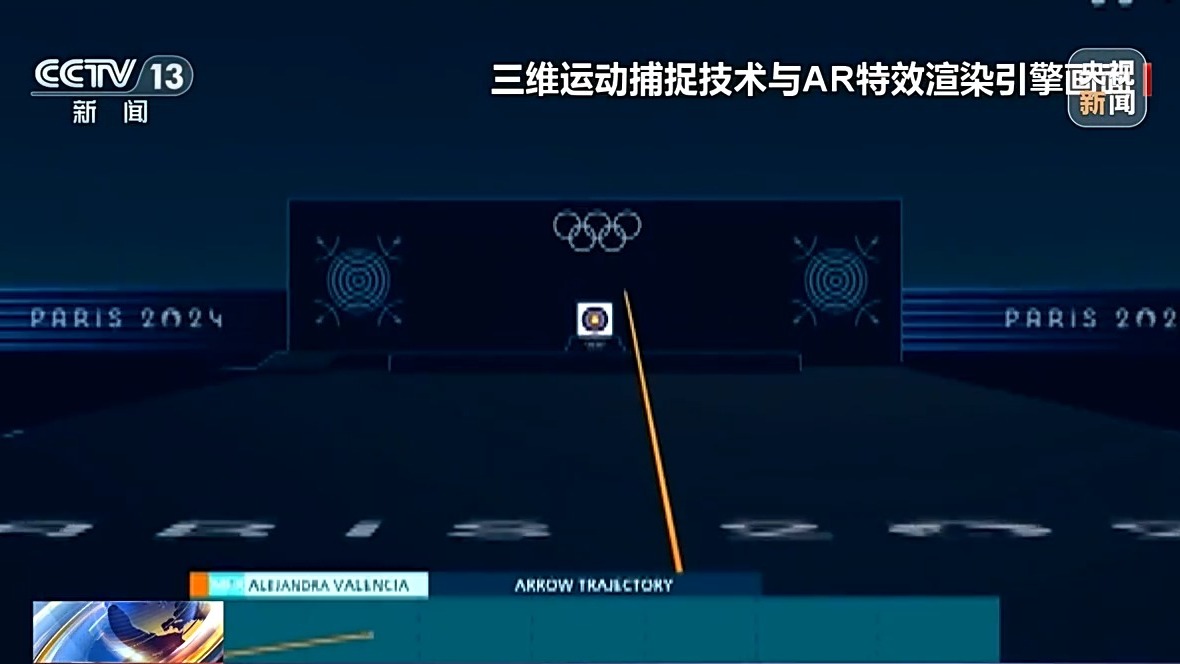
In addition, this set of intelligent sports AI event broadcast realized by 3D motion capture technology and AR special effects rendering engine has also been applied in archery projects.
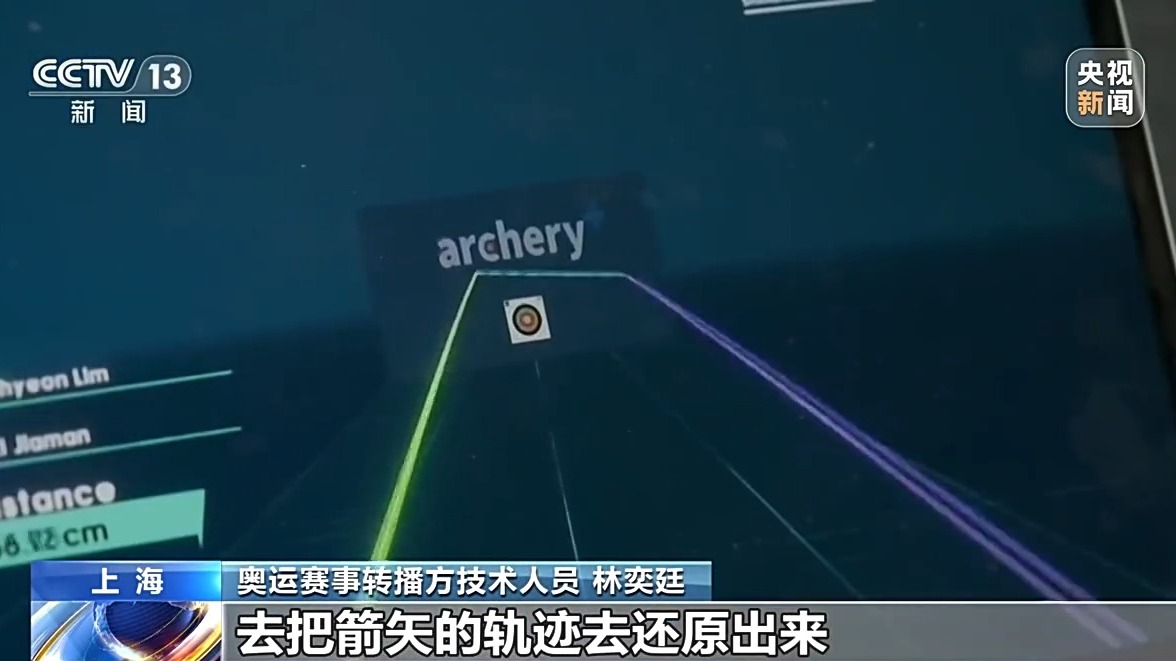
Lin Yiting, a technician of the Olympic Games broadcaster:In fact, in the past, during the broadcast process, archery paid attention to a starting point and an end point, and immediately hit the target after archery was issued. In fact, time is very fast. Therefore, the trajectory of the process in the broadcast language is actually missing. We restore the trajectory of the arrow through the virtual scene, so that this process can be presented to the audience’s field of vision. In the process of explanation, it can also be evaluated based on such a trajectory. For example, the stability of archers, including how to respond to changes in the environment, is more story-telling and more diversified in data.
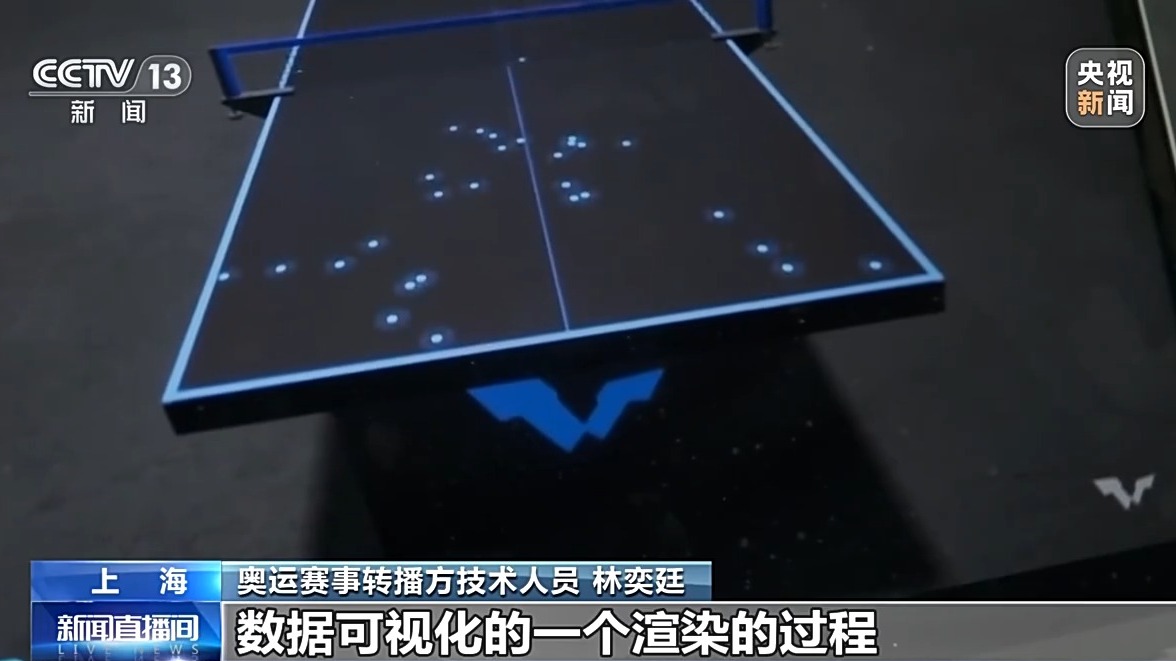
Lin Yiting, a technician of the Olympic Games broadcaster:This scheme actually combines two main parts. The first part is three-dimensional motion capture. Its main job is actually to capture the information of people and balls on the field. In simple terms, it actually captures the three-dimensional coordinates of balls and people in the whole dynamic process. After we get the data back; The second part is actually very important, that is, how to present these data to the audience, so there is a data visualization rendering process, and then all these effects we see now are actually presented by such data visualization technology. So these two parts are the two most important parts of our integration into such a major scheme.
Technical and Tactical Analysis of AI Assisting Athletes
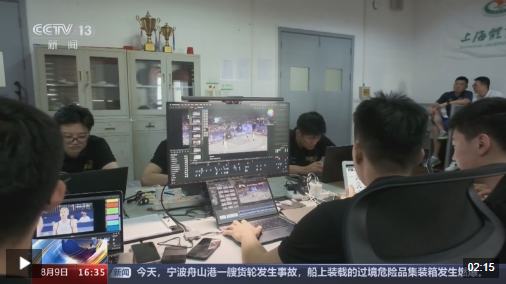
In addition to the application in the game broadcast, AI technology has also played a brand-new role in the technical and tactical analysis of athletes. For example, in table tennis, AI technology can analyze the impact of the ball.
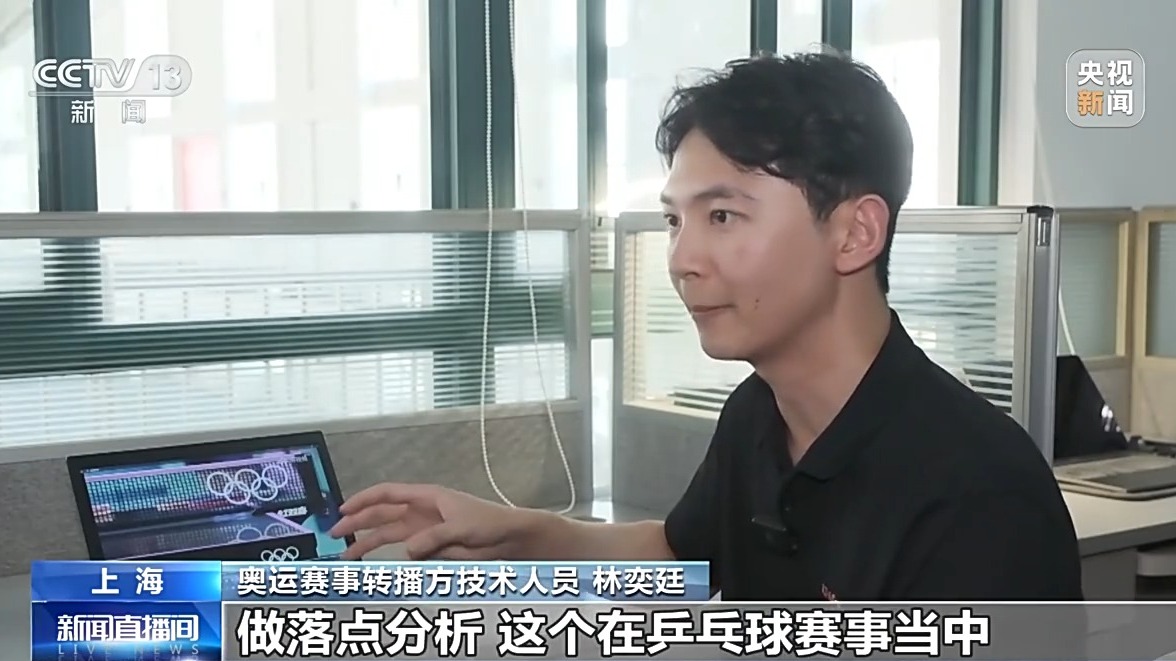
Lin Yiting, a technician of the Olympic Games broadcaster:Do the impact analysis, which is also a technical and tactical indicator with very high attention in table tennis events. We see here a match between Sun Yingsha and Wang Chuqin when they mixed doubles. What’s reflected here is the analysis of how Wang Chuqin and Sun Yingsha hit the opposite side in the process of hitting the ball directly in the signal, including identifying the opponent’s hitting habit, which can make some timely adjustments and responses to the landing point.
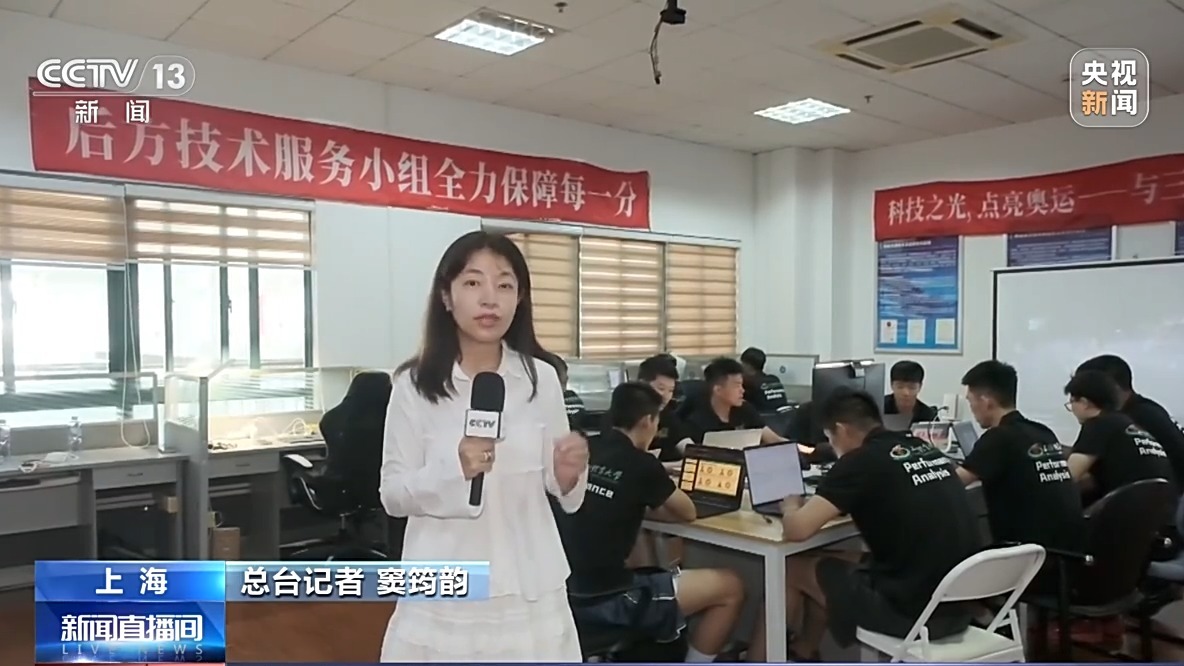
General Desk reporter Dou Junyun:In the Key Laboratory of Sports Techniques and Tactics Analysis of the State Sports General Administration of Shanghai Sport University, the team behind me is mainly responsible for providing a rear technical support for the three-person basketball national team during the Paris Olympic Games, so that the players in front can have a better play.
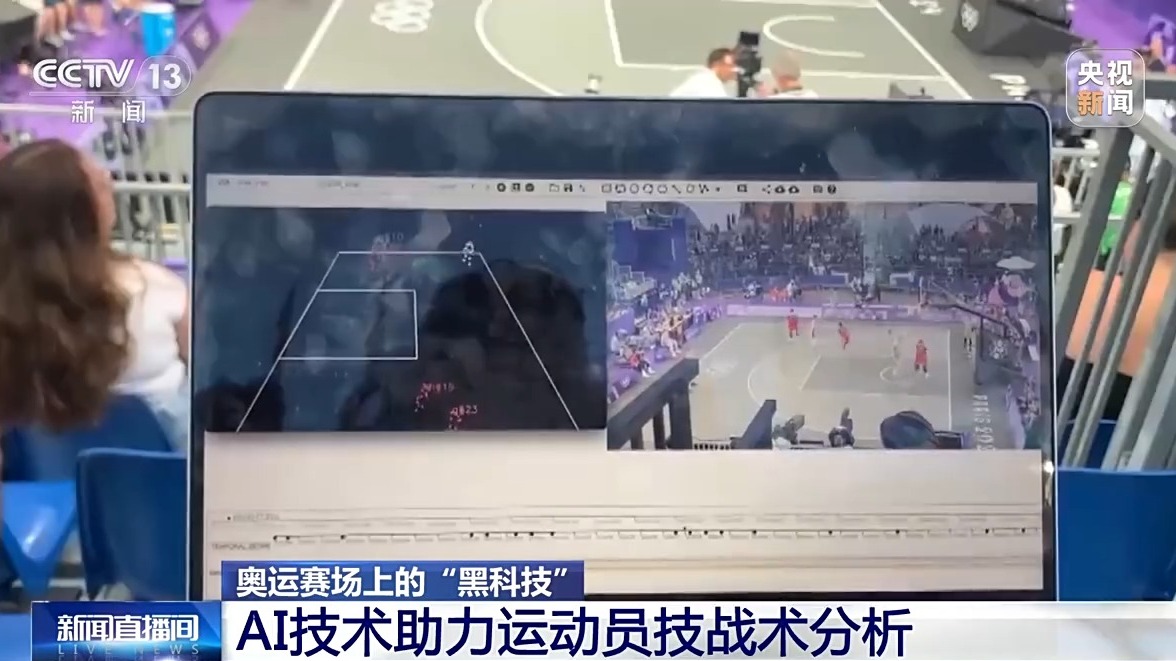
During the Olympic Games, the team used AI basketball performance analysis platform to apply AI big model technology to data statistics and game video processing, providing decision-making basis for training and competitive strategy.
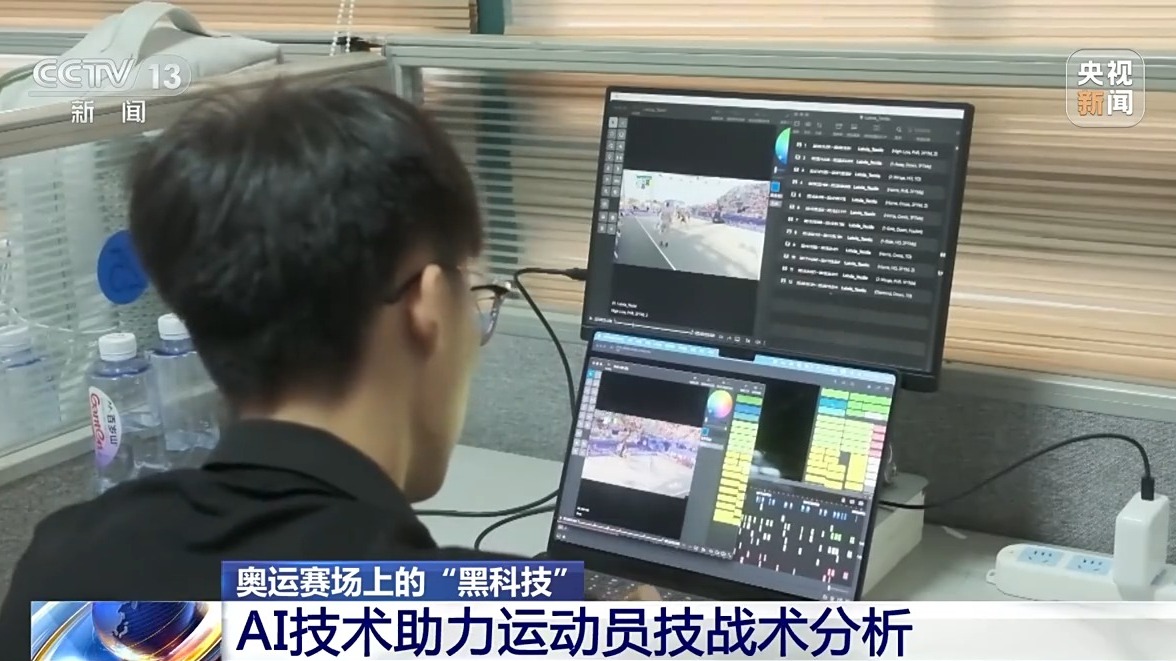
The team is divided into two parts: the front is mainly responsible for shooting and collecting videos of athletes on the court, and the rear team analyzes and processes the videos to quickly provide suggestions and strategies for basketball players in the next game.
Using AI technology can better collect and analyze data.

How is AI technology applied to this analysis system? It is very important to collect and analyze athletes’ exercise intensity. Using AI technology, athletes can obtain data directly without wearing sensors and conduct accurate analysis, thus providing more scientific data support for decision-making.
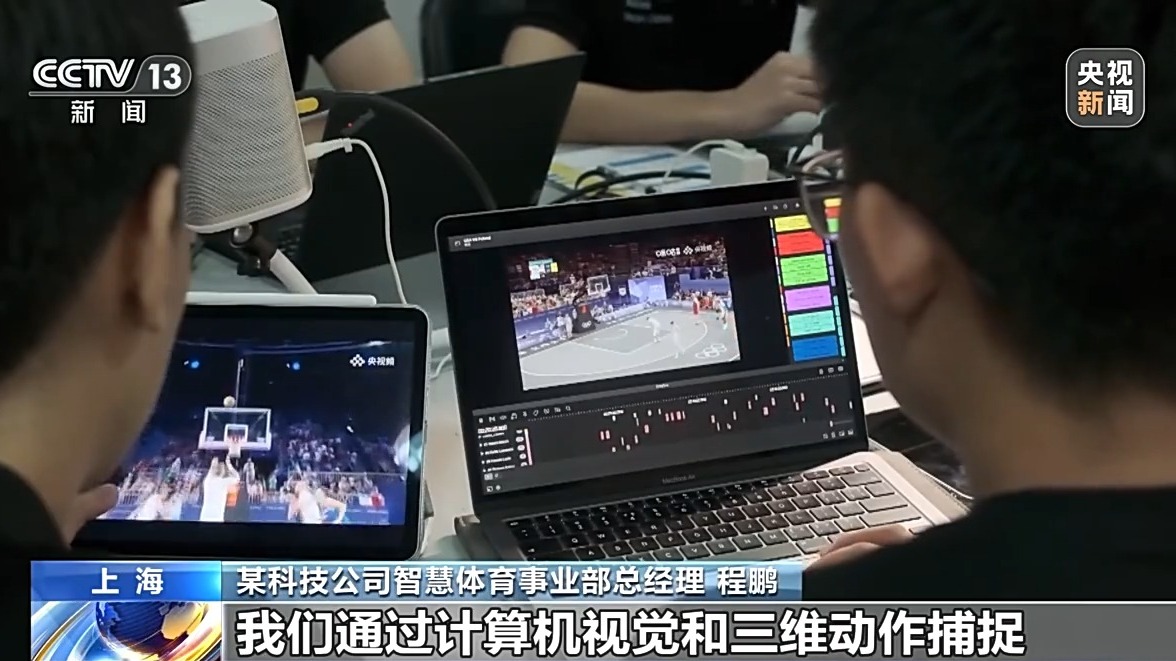
Cheng Peng, General Manager of Smart Sports Division of a technology company:Through computer vision and three-dimensional motion capture, we realize some running intensity of a naked person in a three-dimensional space scene, such as the direction, distance, acceleration and displacement of his running in three-dimensional space, and then calculate his real-time intensity in the game through formulas. Then, through corresponding methods, we can actually make corresponding analysis for opponents, so after a game, we can actually see not only our own competition intensity, but also opponents including.
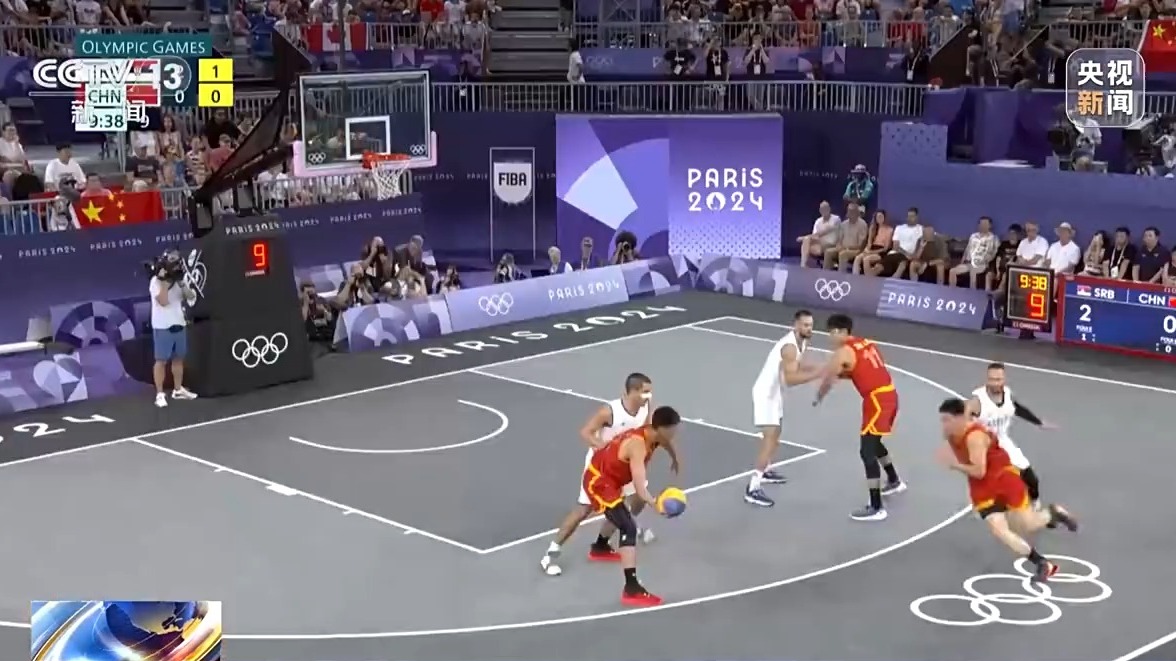
It is understood that the live video collected by AI technology, combined with the unique algorithm, will play a technical supporting role for the decision-making of athletes and coaches in the competition, and this cooperation is actually a major trend in the future sports development.
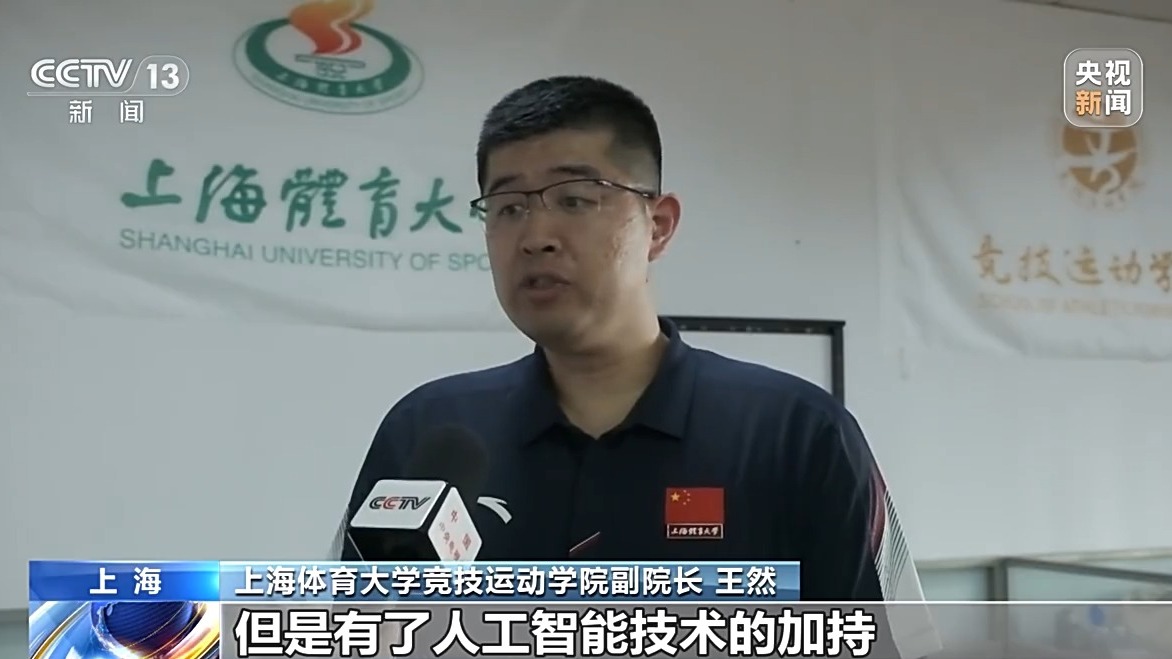
Wang Ran, Vice President of School of Competitive Kinematics, Shanghai Sport University:Because the traditional sports performance analysis or technical and tactical analysis has such a weak feedback time, but with the blessing of artificial intelligence technology, we can not only greatly enhance the efficiency of feedback, but also based on the end-to-end characteristics of artificial intelligence, we may even find some problems about sports performance or technical and tactical aspects that we neglected before, so this also puts forward new demands for our talent training.